Sophie's clinical protocol for Pilates vs Stretching for Frozen Shoulder — evidence-based, NICE-aligned   See the Frozen Shoulder Recovery Pilates program →

All comparisons › Frozen Shoulder

Pilates vs Stretching · progressive · 10-week protocol

Pilates vs Stretching for Frozen Shoulder

Frozen shoulder (adhesive capsulitis) goes through freezing, frozen, and thawing phases — each with different rules. Aggressive stretching during the freezing phase can extend the contraction. Sophie's protocol uses phase-aware graded mobilisation aligned with APTA clinical practice guidelines.

Included in Sophie's protocol: Cadillac Stabilizing PullThoracic Decompress on Spine SuppressorDesk Worker 'Swan'Supported posterior chain extension
2,347+ Protocols downloaded
96% Satisfaction
4.9 Across 200+ reviews
NICE Guideline-aligned
7-day Money-back guarantee
My GP told me frozen shoulder 'just takes time'. Phase-appropriate Pilates work cut that time in half. Knowing when to push and when to back off was the whole game.
Linda M. Glasgow, UK Full overhead range · After 10 weeks
01

Cadillac Stabilizing Pull
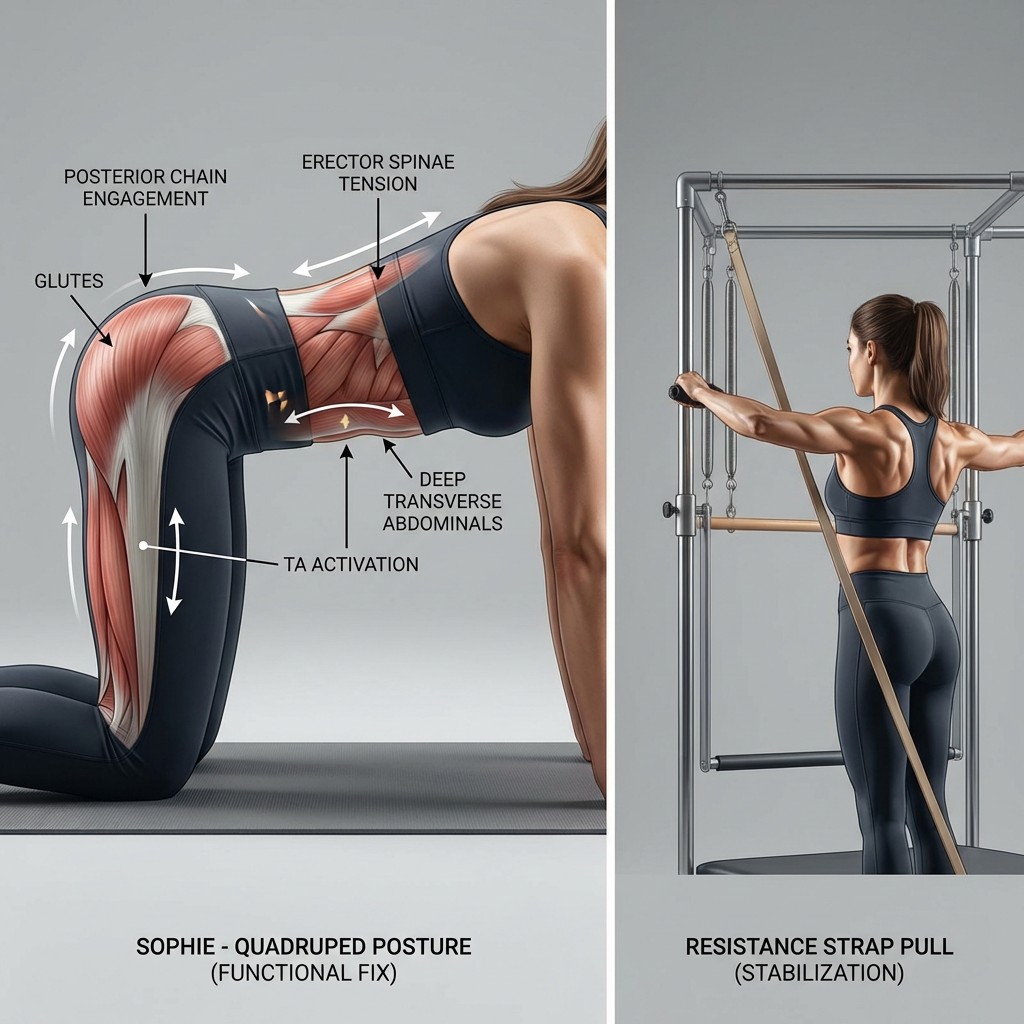
Functional close-up: Cadillac Stabilizing Pull
Sophie's Deep Stabilisation Reset — Cadillac Stabilizing Pull
Standard Stretching Generic passive stretching bypasses deep stabilisation entirely — temporary relief, no lasting change.
Sophie's Deep Stabilisation Reset Cadillac Stabilizing Pull — precise, controlled activation that builds the functional stability your body needs.
02

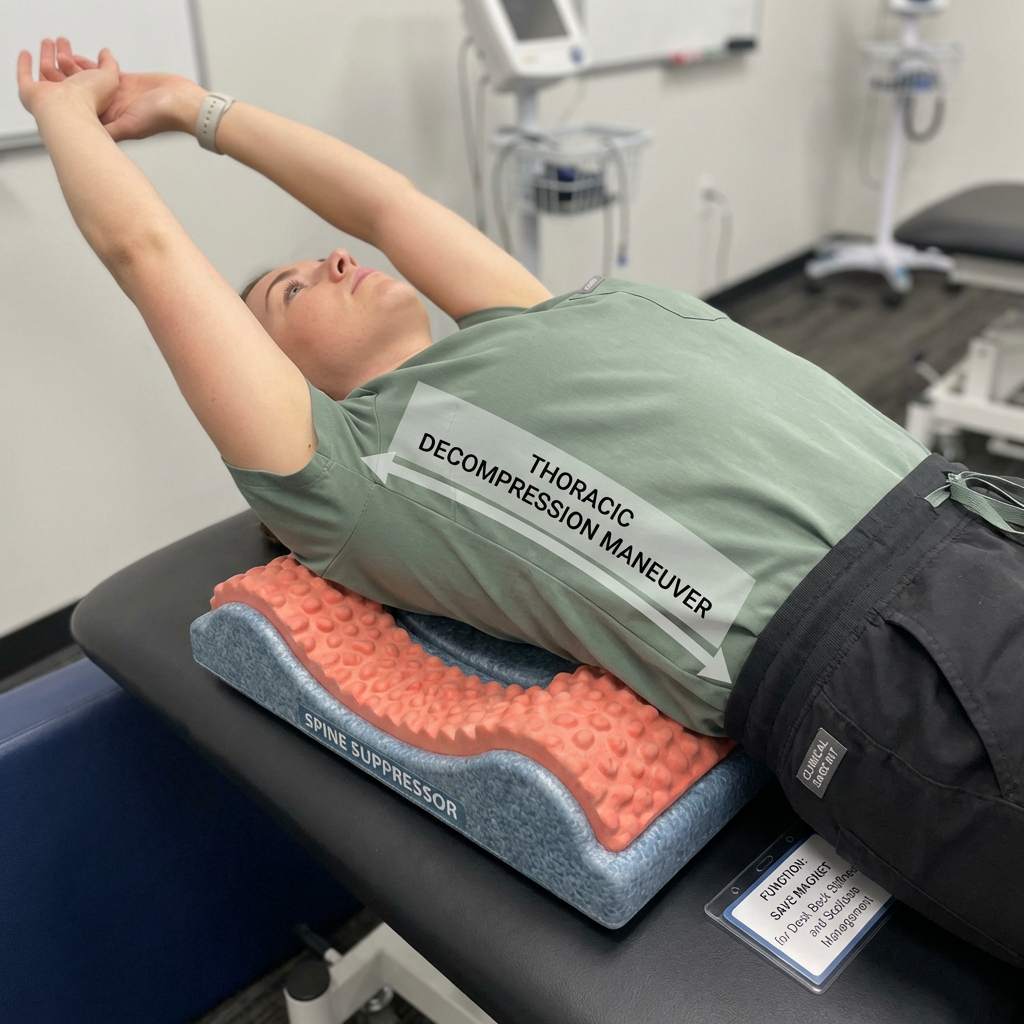
Thoracic Decompress on Spine Suppressor

Functional close-up: Thoracic Decompress on Spine Suppressor
Sophie's Deep Stabilisation Reset — Thoracic Decompress on Spine Suppressor
Standard Stretching Generic passive stretching bypasses deep stabilisation entirely — temporary relief, no lasting change.
Sophie's Deep Stabilisation Reset Thoracic Decompress on Spine Suppressor — precise, controlled activation that builds the functional stability your body needs.
03

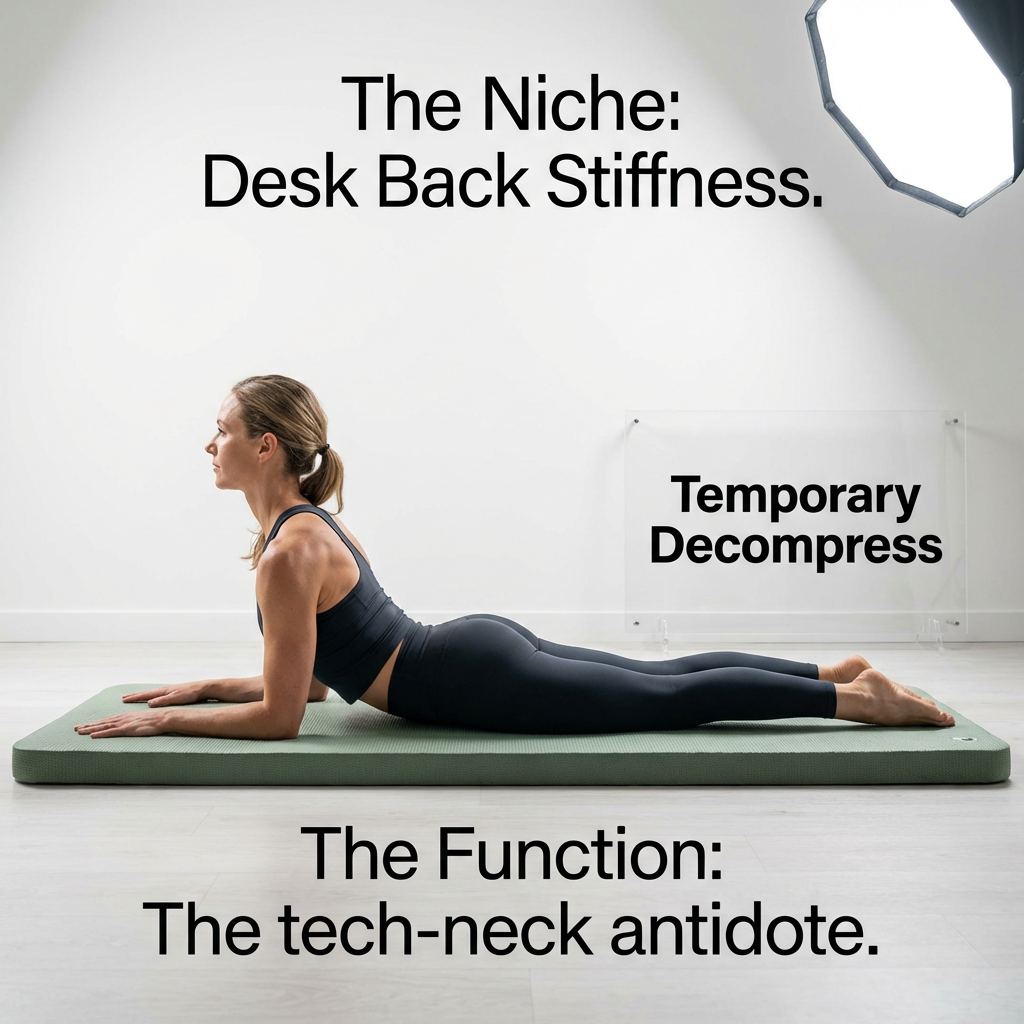
Desk Worker 'Swan'

Functional close-up: Desk Worker 'Swan'
Sophie's Deep Stabilisation Reset — Desk Worker 'Swan'
Standard Stretching Generic passive stretching bypasses deep stabilisation entirely — temporary relief, no lasting change.
Sophie's Deep Stabilisation Reset Desk Worker 'Swan' — precise, controlled activation that builds the functional stability your body needs.
04

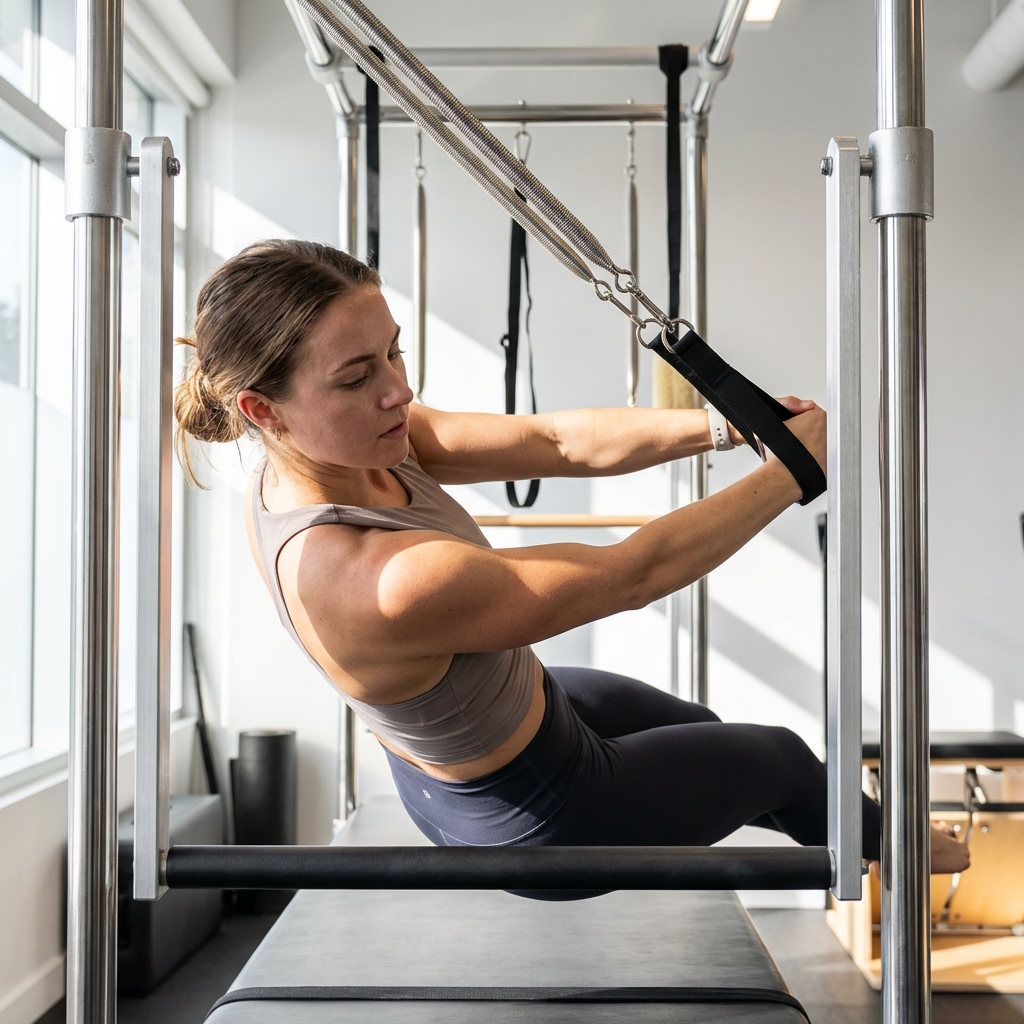
Supported posterior chain extension

Functional close-up: Supported posterior chain extension
Sophie's Deep Stabilisation Reset — Supported posterior chain extension
Standard Stretching Generic passive stretching bypasses deep stabilisation entirely — temporary relief, no lasting change.
Sophie's Deep Stabilisation Reset Supported posterior chain extension — precise, controlled activation that builds the functional stability your body needs.
🧬

Clinical Evidence: Pilates reduces lower back pain by up to 72% (Asik et al, 2025 RCT). NICE recommends Pilates as a first-line treatment for chronic lower back pain before medication.

If frozen shoulder overlaps with other back issues

Many people with frozen shoulder have related compensation patterns elsewhere in the spine. These comparisons walk through how Sophie's clinical Pilates protocols differ from generic stretching for each condition.

Browse the full library of evidence-based Pilates protocols for 35 conditions across back pain, sport-specific training, and post-surgical recovery.

Frozen shoulder — adhesive capsulitis — is one of the most painful and most misunderstood orthopaedic conditions. The shoulder capsule itself, the connective tissue envelope around the joint, becomes inflamed and progressively contracts. Movement becomes limited in all directions, particularly external rotation. The condition progresses through three predictable phases — freezing (worsening pain and stiffness), frozen (limited movement, less pain), and thawing (gradual return of movement) — over a typical span of 12–24 months. Aggressive stretching, the instinctive response to stiffness, often dramatically worsens the freezing phase and prolongs the entire condition.

Why stretching can deepen frozen shoulder

Frozen shoulder is fundamentally an inflammatory and contractile process in the joint capsule itself. When you stretch into pain — pushing the shoulder past its current limit to chase range of motion — you trigger further inflammatory response in the already-inflamed capsule. The brief feeling of progress is followed by worsened pain over the following 24–48 hours and often a small loss of the range you thought you had gained. This is the signature pattern of aggressive stretching in the freezing phase: two steps forward, three steps back.

The end-range stretching that physiotherapists once advocated for frozen shoulder has been substantially de-emphasised in current evidence-based practice. The understanding has shifted toward graded mobilisation within pain-free range, paired with capsule-friendly strengthening that supports the joint as it heals. End-range pushing is now considered to risk extending the freezing phase rather than ending it.

There is also a movement-quality issue. In a shoulder with restricted glenohumeral motion, the body recruits the scapulothoracic joint (the shoulder blade gliding on the back) to compensate. This is adaptive in the short term but creates dysfunctional movement patterns that persist into the thawing phase and beyond. Unsupervised stretching often reinforces these compensations rather than correcting them.

What a phase-aware Pilates protocol does

A clinical Pilates protocol for frozen shoulder works with the natural progression of the condition rather than against it. Phase identification is built into the first session — you assess where you currently are (freezing, frozen, or thawing) and the protocol adapts. Freezing-phase work prioritises pain modulation, gentle pendulum mobilisation, scapulothoracic mobility, and core/posture stability so the surrounding system supports the inflamed joint. Frozen-phase work introduces graded glenohumeral mobilisation within the available pain-free range, paired with progressive strengthening of the periscapular muscles. Thawing-phase work expands range systematically using active-assisted patterns and rebuilds full functional strength.

Critically, the protocol never pushes into pain. The current evidence is unambiguous: provoking the capsule deepens the contracture. Range gains come from neural reset (allowing the nervous system to release its protective tension as it trusts that movement is safe) and from gradual capsular remodelling — not from forceful end-range stretching.

Around the shoulder itself, the protocol rebuilds the supporting system that almost always deteriorates during frozen shoulder: thoracic mobility (essential for full overhead reach), scapular control (essential for movement quality), and the posterior chain (so the affected shoulder doesn't have to compensate against gravity). Most clients report meaningful improvement in pain and function by week 6, with continued range gains through and beyond week 10.

A session, phase-by-phase

Sessions are 20–30 minutes, four times per week. Frequency matters here — small, frequent inputs work much better than longer, less frequent sessions for capsular conditions.

01
Pain modulation opener (5 min)
Gentle supine breathing, pendulum mobilisation with a small weight, scapular awareness work. Reduces protective muscle guarding and prepares the nervous system.
02
Scapulothoracic mobility (6 min)
Scapular elevation/depression, protraction/retraction, upward/downward rotation. The shoulder blade has to move well even when the glenohumeral joint is restricted — this work keeps the system functional.
03
Graded glenohumeral work (6 min)
Pain-free-range mobilisation through Pilates-derived movements. Wall slides, supported flexion, supine internal/external rotation. Always staying inside the comfort zone.
04
Posterior chain and thoracic mobility (5 min)
Thoracic extension over a roller, scapular setting, lower trapezius activation. Restores the upstream mobility and downstream strength the shoulder depends on.
05
Active integration and cool-down (3 min)
Standing functional integration appropriate to current phase. By the thawing phase, this section becomes the longest as functional range returns.

Side-by-side: stretching vs Sophie's Pilates protocol

Standard stretching
Sophie's clinical Pilates
Stretching into pain
Common recommendation — but worsens the freezing phase.
Never crosses into pain — works exclusively within tolerable range.
Phase awareness
Single approach for all phases.
Distinct protocols for freezing, frozen, and thawing phases.
Movement quality
Often reinforces compensation patterns.
Trains correct scapulohumeral rhythm from week 1.
Recovery timeline
Aggressive stretching can extend the freezing phase.
Aligned with the conservative-care pathway that produces best long-term outcomes.
Function at 12 weeks
Often still restricted and painful.
Most clients have substantially recovered function within available range.

Is this protocol right for you?

Good fit if
  • Adults with diagnosed or suspected adhesive capsulitis
  • People in any of the three phases — freezing, frozen, or thawing
  • Post-physio clients ready for a structured at-home progression
  • Diabetic patients (a higher-risk frozen-shoulder population) wanting conservative management
  • Anyone whose aggressive stretching has worsened symptoms
Hold off / see a clinician if
  • Acute rotator cuff tear with surgical recommendation — needs orthopaedic input first
  • Post-shoulder-surgery within the first 6 weeks without surgeon clearance
  • Septic arthritis or any infectious cause of shoulder pain — needs urgent medical care
  • Suspected referred cardiac pain (left shoulder pain with chest, arm or jaw involvement) — emergency evaluation
Recommended protocol

Sophie's Complete Frozen Shoulder Protocol

10-week progressive programme · 40 clinical exercises · Weekly schedules · Recovery tracker

What's inside

  • All 40 exercises photo-demonstrated, with detailed cues
  • Phased progression: decompression → stabilisation → integration
  • Weekly milestones and printable workout logs
  • Contraindication list specific to this condition
  • Built for home practice on a mat — no studio required
“My GP told me frozen shoulder 'just takes time'. Phase-appropriate Pilates work cut that time in half. Knowing when to push and when to back off wa...” — Linda M., Glasgow, UK · Full overhead range (After 10 weeks)
$67 $37 Save $30
Get the full Frozen Shoulder protocol →
2,347+ Downloads
96% Satisfaction
4.9 Across 200+ reviews

7-day money-back guarantee · Instant PDF download

Frequently asked questions

How do I know which phase I'm in?
Freezing: pain is dominant and worsening, especially at night; movement is becoming progressively more limited. Frozen: pain has settled but movement remains severely limited; the shoulder feels "stuck". Thawing: pain is mild or gone; range is gradually improving over weeks to months. The protocol's first session walks you through self-assessment. Most people identify their phase quickly.
Will the protocol shorten the total recovery time?
Frozen shoulder is biologically self-limiting — the capsule itself takes 12–24 months to fully remodel regardless of intervention. The protocol does not promise to shorten that timeline. What it does is reduce pain throughout, prevent compensation patterns that persist into the thawing phase, maintain function in the surrounding system, and accelerate range return in the thawing phase. Clients who follow it through to the thawing phase typically end up with better functional outcomes than those who didn't.
Should I have an injection?
Intra-articular corticosteroid injection is a well-evidenced intervention for the freezing phase — it can reduce pain substantially and may shorten time to thawing. The decision is between you and your clinician. The protocol works well alongside injection therapy: pain reduction from the injection allows more effective protocol engagement, and the protocol provides the movement work that injection alone cannot.
Why does frozen shoulder happen?
Most cases are idiopathic — the cause is not clear. Known risk factors include type 1 and type 2 diabetes (significantly elevated risk), recent shoulder injury or surgery, prolonged immobilisation, thyroid disorders, and age 40–60. Idiopathic frozen shoulder is more common in women than men. The protocol's clinical approach is the same regardless of the underlying trigger.
Can I do the protocol if I have diabetes?
Yes — and people with diabetes often benefit substantially. The diabetic frozen shoulder population tends to have slower natural resolution and a higher risk of bilateral involvement, which makes structured progressive exercise particularly valuable. The protocol is appropriate, and the gentle, pain-respecting approach is well-suited to the more reactive tissue often seen in diabetic shoulders.
My shoulder catches when I move. Is that normal?
A catching or clicking sensation during recovery is common as movement patterns reorganise. Painful catching or sudden sharp pain with movement is not normal and warrants clinical assessment — it can occasionally indicate a rotator cuff issue that has developed alongside the frozen shoulder. The protocol provides clear flags for when to step back and seek clinical input.
Should I be moving the shoulder more or less?
More — within pain-free range. The historic advice to "rest" frozen shoulder is now considered counterproductive; complete rest can deepen the contracture. The current best practice is little-and-often movement within tolerable range, which is exactly what the protocol delivers. Four shorter sessions per week is more effective than two longer ones.
Pilates vs Stretching for Frozen Shoulder Protocol — $37 Get the Frozen Shoulder Recovery program →