Sophie's clinical protocol for Pilates vs Stretching for Scoliosis — evidence-based, NICE-aligned   See the Scoliosis Management Pilates program →

All comparisons › Scoliosis

Pilates vs Stretching · progressive · 10-week protocol

Pilates vs Stretching for Scoliosis

Generic stretching treats both sides the same. Scoliosis isn't symmetric — and treating it that way often reinforces the rotational pattern. Sophie's protocol uses asymmetric decompression and rotational stabilisation aligned with SOSORT physiotherapeutic scoliosis-specific exercise principles.

Included in Sophie's protocol: Thoracic Decompress on Spine SuppressorAsymmetric supported movementQuadruped TA Engagement for StillnessSupine Stable Pelvic Bridge
2,347+ Protocols downloaded
96% Satisfaction
4.9 Across 200+ reviews
NICE Guideline-aligned
7-day Money-back guarantee
Every Pilates class I'd taken treated me like I had a straight spine. This was the first programme that actually addressed the curve. Less fatigue, fewer rib flares.
Priya S. London, UK Significantly reduced rib pain · After 8 weeks
01

Thoracic Decompress on Spine Suppressor
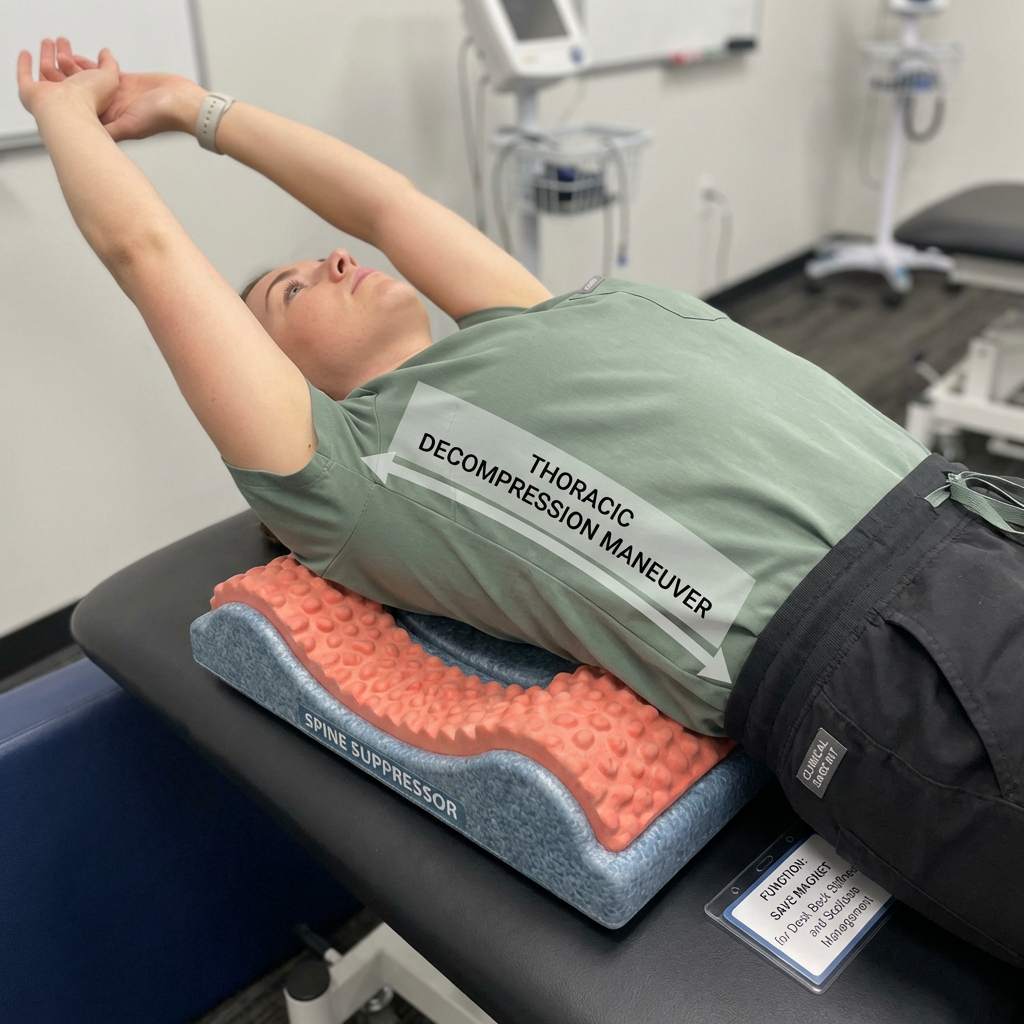
Functional close-up: Thoracic Decompress on Spine Suppressor
Sophie's Deep Stabilisation Reset — Thoracic Decompress on Spine Suppressor
Standard Stretching Generic passive stretching bypasses deep stabilisation entirely — temporary relief, no lasting change.
Sophie's Deep Stabilisation Reset Thoracic Decompress on Spine Suppressor — precise, controlled activation that builds the functional stability your body needs.
02

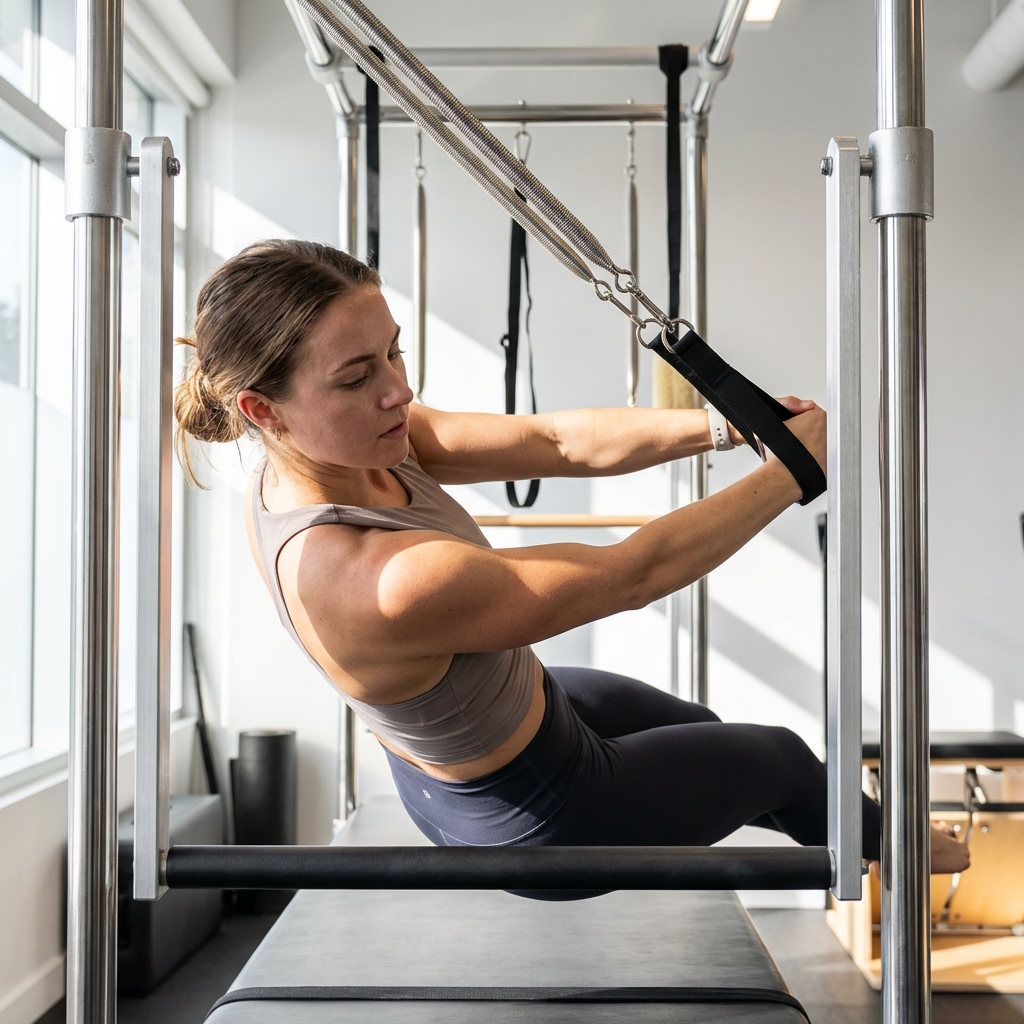
Asymmetric supported movement

Functional close-up: Asymmetric supported movement
Sophie's Deep Stabilisation Reset — Asymmetric supported movement
Standard Stretching Generic passive stretching bypasses deep stabilisation entirely — temporary relief, no lasting change.
Sophie's Deep Stabilisation Reset Asymmetric supported movement — precise, controlled activation that builds the functional stability your body needs.
03

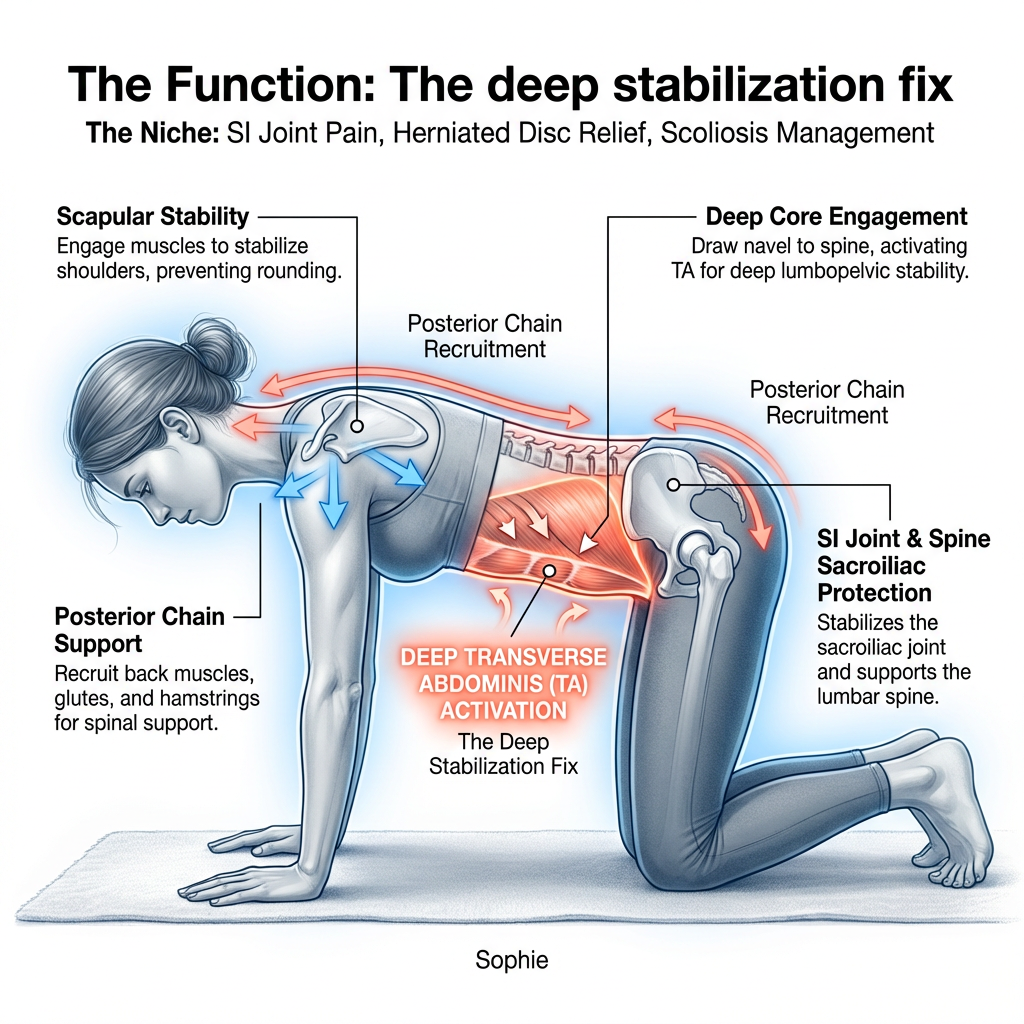
Quadruped TA Engagement for Stillness

Functional close-up: Quadruped TA Engagement for Stillness
Sophie's Deep Stabilisation Reset — Quadruped TA Engagement for Stillness
Standard Stretching Generic passive stretching bypasses deep stabilisation entirely — temporary relief, no lasting change.
Sophie's Deep Stabilisation Reset Quadruped TA Engagement for Stillness — precise, controlled activation that builds the functional stability your body needs.
04

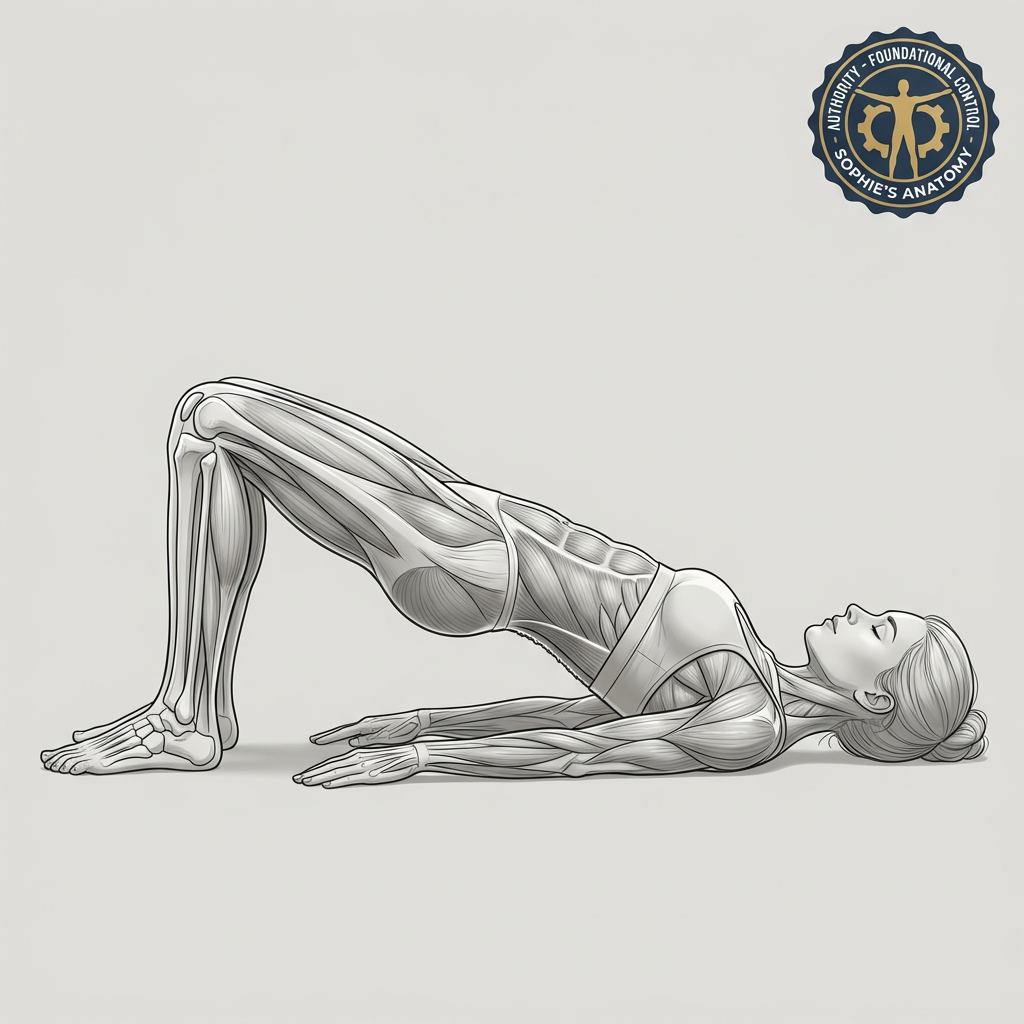
Supine Stable Pelvic Bridge

Functional close-up: Supine Stable Pelvic Bridge
Sophie's Deep Stabilisation Reset — Supine Stable Pelvic Bridge
Standard Stretching Generic passive stretching bypasses deep stabilisation entirely — temporary relief, no lasting change.
Sophie's Deep Stabilisation Reset Supine Stable Pelvic Bridge — precise, controlled activation that builds the functional stability your body needs.
🧬

Clinical Evidence: Pilates reduces lower back pain by up to 72% (Asik et al, 2025 RCT). NICE recommends Pilates as a first-line treatment for chronic lower back pain before medication.

If scoliosis overlaps with other back issues

Many people with scoliosis have related compensation patterns elsewhere in the spine. These comparisons walk through how Sophie's clinical Pilates protocols differ from generic stretching for each condition.

Browse the full library of evidence-based Pilates protocols for 35 conditions across back pain, sport-specific training, and post-surgical recovery.

Scoliosis is a three-dimensional curvature of the spine — it bends sideways and rotates simultaneously. For adults with non-progressive scoliosis (Cobb angles typically under 40 degrees), exercise is the central management strategy. The aim is not to "fix" the curve — adult scoliotic curves do not reverse — but to manage pain, prevent progression, and maintain function. Generic stretching can paradoxically worsen scoliosis pain because it treats the spine as a symmetrical structure that needs balanced opening. A scoliotic spine needs the opposite: targeted, asymmetric work that addresses each side of the curve specifically.

Why symmetrical stretching can backfire

In a scoliotic spine, one side of each curve is concave (shortened muscles, compressed disc space) and the other side is convex (lengthened muscles, expanded disc space). Symmetrical stretching — child's pose, forward folds, lateral flexion to both sides equally — applies equal force to both sides. The result is that the convex (already-stretched) side stretches further, while the concave (already-tight) side resists. Over time, this can deepen the asymmetry rather than reduce it.

The rotational dimension makes this worse. A scoliotic spine isn't just bent — it's twisted. Generic spinal twists treat both rotational directions the same, even though one direction takes the spine further into its existing rotational pattern (deepening the curve's torsional component) and the other unwinds it. Without knowing which is which, well-intentioned twisting often makes pain worse.

Finally, scoliotic spines have characteristic patterns of muscle overactivity (the concave-side erectors hold the curve in place around the clock) and underactivity (the convex-side stabilisers have been stretched out and don't fire well). Stretching ignores this pattern entirely. Without strengthening the underactive side and learning to release the overactive side under control, the curve's muscular pattern remains.

What an asymmetric Pilates protocol does

A scoliosis-specific Pilates protocol works the spine as the three-dimensional structure it actually is. The work is asymmetric by design. On the concave side of each curve, the protocol uses gentle decompression — supported lengthening positions, breath-driven rib expansion — to open the compressed segment. On the convex side, the protocol uses targeted strengthening — side-lying work, asymmetric loading, single-arm or single-leg variations — to wake up the under-firing stabilisers.

The rotational component is addressed through Pilates' classic rotational exercises, performed with awareness of which direction unwinds the curve and which deepens it. The protocol provides clear cueing on this so you know, on each rotation, what your spine should be doing. Combined with deep core work that provides the muscular framework the curve needs to be supported within, the result is a spine that hurts less, moves better, and shows much slower progression on follow-up imaging.

For most adult scoliosis presentations, the goal is functional: less pain, more mobility, better breathing capacity, no further loss of height or curve increase. The protocol is built around these realistic, achievable outcomes — not a promise of curve reversal that no exercise programme can deliver.

How a scoliosis-aware session is structured

Sessions are 30 minutes, three to four times per week. The structure mirrors the Schroth method principles familiar to scoliosis physiotherapists, applied through Pilates movement vocabulary.

01
Postural awareness setup (5 min)
Standing and supine self-assessment in front of a mirror. Identifying the curve direction, the concave/convex sides, and rotational pattern. This becomes the orientation for everything that follows.
02
Rotational breathing (6 min)
Three-dimensional breathing into the concave (compressed) side of the curve. This is the Schroth-derived breathwork that opens the compressed ribs and creates internal space. Often the most surprisingly effective single element of the protocol.
03
Asymmetric strengthening (8 min)
Side-planks favouring the convex side, single-arm reach extensions, asymmetric quadruped work. These wake up the convex-side stabilisers that have been chronically lengthened.
04
Decompression and unwinding (7 min)
Supported decompression positions, controlled rotation in the unwinding direction, breath-driven lengthening through the curve.
05
Functional integration (4 min)
Standing and walking patterning that carries the new alignment into daily life. By week 6, this section trains the spine to hold the corrected position automatically.

Side-by-side: stretching vs Sophie's Pilates protocol

Standard stretching
Sophie's clinical Pilates
Symmetry of intervention
Bilateral stretches treat scoliosis like a symmetrical condition.
Asymmetric work — different intervention on the concave and convex sides.
Rotational dimension
Rotational work ignores the curve's torsional pattern.
Explicit cueing on which rotation unwinds the curve, which deepens it.
Breathing capacity
No effect on rib-cage mobility.
Three-dimensional breathing opens compressed ribs and restores breathing capacity.
Pain management
Often inconsistent; can worsen one side.
Targeted release of overactive concave erectors, strengthening of underactive convex stabilisers.
Long-term progression
No documented effect on curve progression.
Aligned with the exercise principles that scoliosis-specific physiotherapy programmes (Schroth, SEAS) use to slow adult progression.

Is this protocol right for you?

Good fit if
  • Adults with diagnosed non-progressive scoliosis
  • People with Cobb angles up to ~40 degrees
  • Post-Schroth-therapy clients who want a structured at-home progression
  • People with adolescent idiopathic scoliosis now in adulthood
  • Adults with degenerative scoliosis seeking pain management and mobility maintenance
Hold off / see a clinician if
  • Children and adolescents with progressive scoliosis — needs paediatric specialist management
  • Adults with Cobb angles above 50 degrees, or any rapidly progressing curve — needs surgical consultation
  • Anyone post-spinal fusion within the first 12 months without surgeon clearance
  • Acute scoliosis pain crisis with neurological symptoms — needs medical evaluation first
Recommended protocol

Sophie's Complete Scoliosis Protocol

10-week progressive programme · 36 clinical exercises · Weekly schedules · Recovery tracker

What's inside

  • All 36 exercises photo-demonstrated, with detailed cues
  • Phased progression: decompression → stabilisation → integration
  • Weekly milestones and printable workout logs
  • Contraindication list specific to this condition
  • Built for home practice on a mat — no studio required
“Every Pilates class I'd taken treated me like I had a straight spine. This was the first programme that actually addressed the curve. Less fatigue,...” — Priya S., London, UK · Significantly reduced rib pain (After 8 weeks)
$67 $37 Save $30
Get the full Scoliosis protocol →
2,347+ Downloads
96% Satisfaction
4.9 Across 200+ reviews

7-day money-back guarantee · Instant PDF download

Frequently asked questions

I have a 25-degree curve. Will Pilates reverse it?
Adult scoliotic curves do not reverse with exercise — no exercise programme delivers that, despite what some marketing claims. What a well-designed protocol can do is reduce pain, improve breathing capacity, restore mobility, slow progression, and maintain function across decades. For a 25-degree curve, these outcomes are very achievable and meaningful.
Should I see a Schroth-certified physiotherapist instead?
If you have access to a Schroth or SEAS-trained physiotherapist, that is the gold standard for scoliosis-specific exercise. The protocol does not replace specialist input where it's available. What it does is provide a structured at-home programme built on the same biomechanical principles — useful both as a complement to clinical work and where specialist therapists aren't accessible.
How do I know which side is concave?
The protocol includes a self-assessment guide with photo references. The simple rule for the most common pattern (right thoracic curve) is that the right rib cage sticks out further when you bend forward — the concavity is on the left side at the thoracic level. The protocol's first session walks you through identifying your specific pattern so the asymmetric work is targeted correctly.
Can scoliosis cause shortness of breath?
Yes — moderate to severe thoracic curves compress one side of the rib cage and reduce breathing capacity on that side. This is often subclinical for years and presents as exercise intolerance rather than overt breathlessness. The protocol's rotational breathing work directly addresses this and many clients report improved exercise breathing capacity by weeks 4–6.
I have lumbar scoliosis, not thoracic. Is this still the right protocol?
Yes — the principles are identical, applied to the lumbar curve. The breathing work has less prominence (because the lumbar spine has no ribs to compress), but the asymmetric strengthening, controlled unwinding, and deep core work are unchanged. The protocol explicitly covers both lumbar-dominant and thoracic-dominant patterns.
Will this help if I wore a brace as a teenager?
Adults who were braced as teens often present with the original curve plus the secondary issues that come from decades of asymmetric loading — chronic concave-side back pain, breathing capacity reduction, and compensatory hip/pelvic asymmetry. The protocol is well-suited to this population: it addresses both the original curve pattern and the secondary issues that have accumulated.
Can I run, lift weights, do yoga while doing the protocol?
Yes — none of these are contraindicated in non-progressive adult scoliosis. The protocol provides specific guidance on asymmetric awareness during these activities (e.g., which side feels overloaded during running, which yoga poses to modify) so they reinforce rather than fight what the protocol is building.
Pilates vs Stretching for Scoliosis Protocol — $37 Get the Scoliosis Management program →