Sophie's clinical protocol for Pilates vs Stretching for SI Joint Pain — evidence-based, NICE-aligned   See the Si Joint Pain Pilates program →

All comparisons › SI Joint Pain

Pilates vs Stretching · acute · 8-week protocol

Pilates vs Stretching for SI Joint Pain

Most stretches loosen the muscles holding the SI joint together. Sophie's protocol uses precise core compression to create internal symmetry and stability — the opposite approach, and the one that lasts.

Included in Sophie's protocol: Foot Roll ArticulationSupine Stable Pelvic BridgeQuadruped TA Engagement for StillnessCadillac Stabilizing Pull
2,347+ Protocols downloaded
96% Satisfaction
4.9 Across 200+ reviews
NICE Guideline-aligned
7-day Money-back guarantee
After 14 months of stretching myself sideways for SI joint pain, the stability work was the missing piece. First time I've gone four weeks without a flare.
Hannah R. Edinburgh, UK 4 weeks flare-free · After 6 weeks
01

Foot Roll Articulation
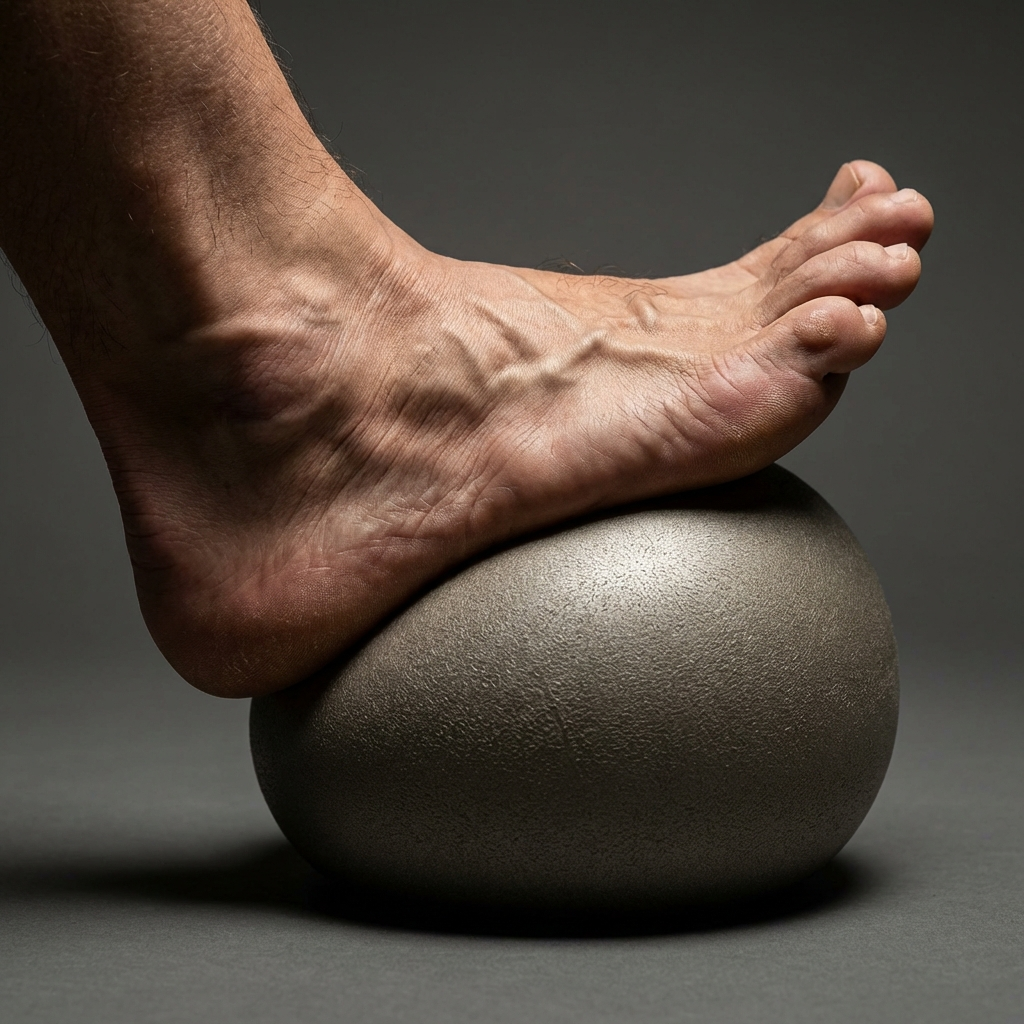
Functional close-up: Foot Roll Articulation
Sophie's Deep Stabilisation Reset — Foot Roll Articulation
Standard Stretching Generic passive stretching bypasses deep stabilisation entirely — temporary relief, no lasting change.
Sophie's Deep Stabilisation Reset Foot Roll Articulation — precise, controlled activation that builds the functional stability your body needs.
02

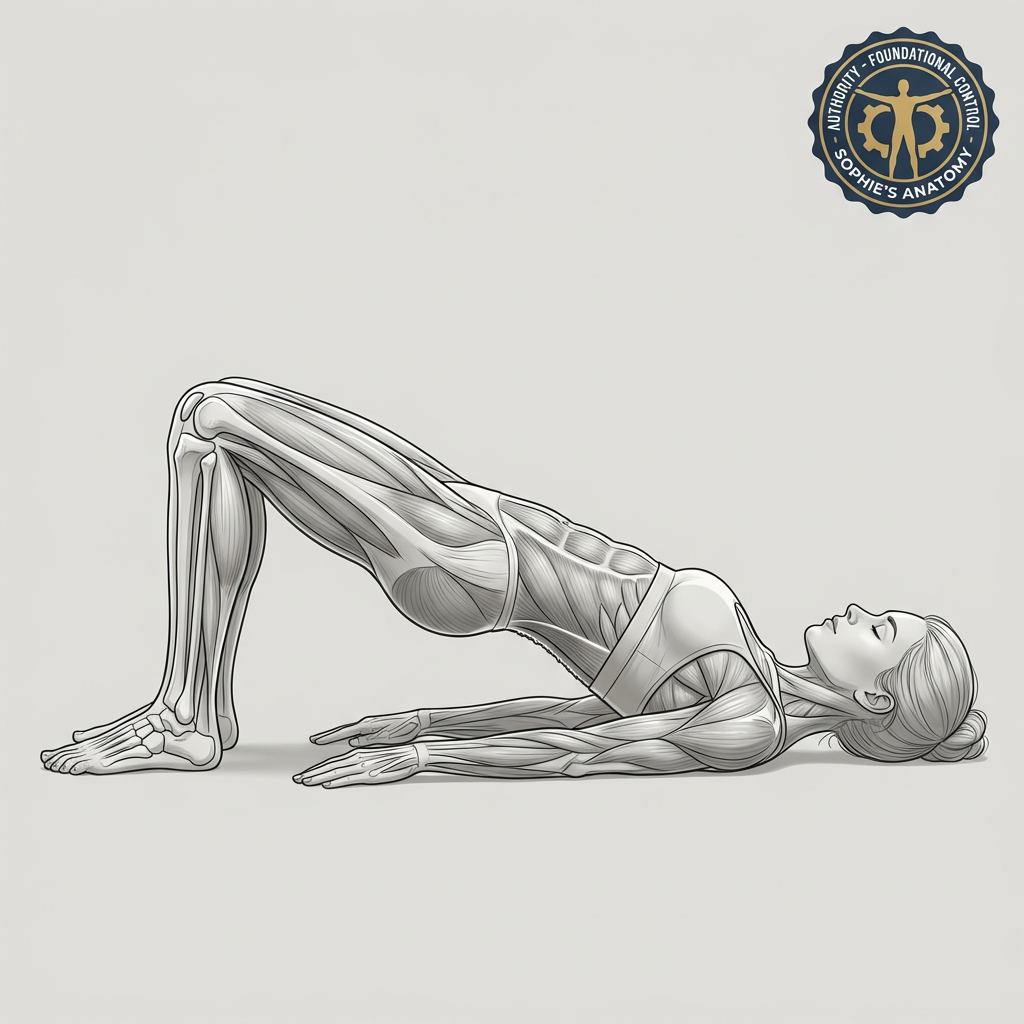
Supine Stable Pelvic Bridge

Functional close-up: Supine Stable Pelvic Bridge
Sophie's Deep Stabilisation Reset — Supine Stable Pelvic Bridge
Standard Stretching Generic passive stretching bypasses deep stabilisation entirely — temporary relief, no lasting change.
Sophie's Deep Stabilisation Reset Supine Stable Pelvic Bridge — precise, controlled activation that builds the functional stability your body needs.
03

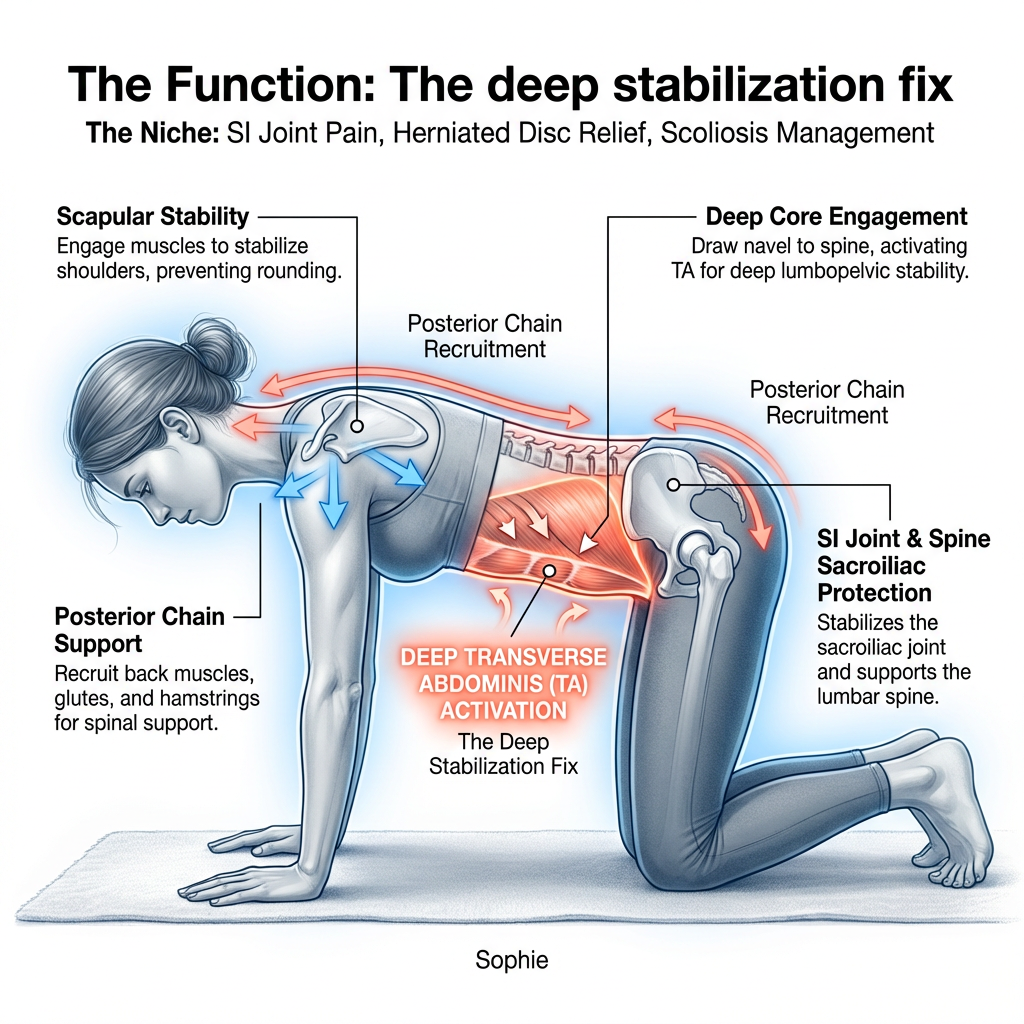
Quadruped TA Engagement for Stillness

Functional close-up: Quadruped TA Engagement for Stillness
Sophie's Deep Stabilisation Reset — Quadruped TA Engagement for Stillness
Standard Stretching Generic passive stretching bypasses deep stabilisation entirely — temporary relief, no lasting change.
Sophie's Deep Stabilisation Reset Quadruped TA Engagement for Stillness — precise, controlled activation that builds the functional stability your body needs.
04

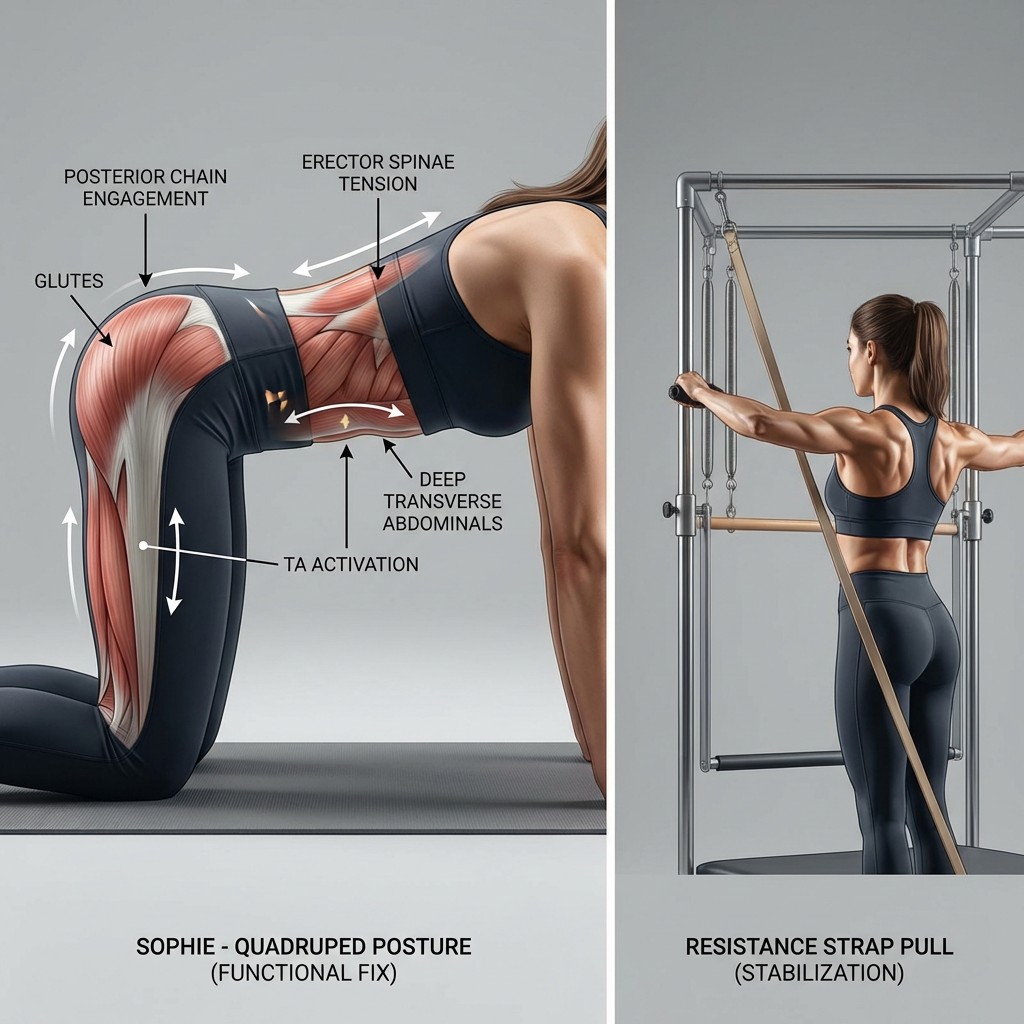
Cadillac Stabilizing Pull

Functional close-up: Cadillac Stabilizing Pull
Sophie's Deep Stabilisation Reset — Cadillac Stabilizing Pull
Standard Stretching Generic passive stretching bypasses deep stabilisation entirely — temporary relief, no lasting change.
Sophie's Deep Stabilisation Reset Cadillac Stabilizing Pull — precise, controlled activation that builds the functional stability your body needs.
🧬

Clinical Evidence: Pilates reduces lower back pain by up to 72% (Asik et al, 2025 RCT). NICE recommends Pilates as a first-line treatment for chronic lower back pain before medication.

If SI joint overlaps with other back issues

Many people with SI joint have related compensation patterns elsewhere in the spine. These comparisons walk through how Sophie's clinical Pilates protocols differ from generic stretching for each condition.

Browse the full library of evidence-based Pilates protocols for 35 conditions across back pain, sport-specific training, and post-surgical recovery.

The sacroiliac (SI) joint is a small, semi-fixed joint between the sacrum and the ilium of the pelvis. It is not designed to move much — perhaps two to four degrees in any direction. When the SI joint becomes painful, the problem is almost never that it is too stiff. The problem is that one or both sides have lost their normal stability and are micro-moving in ways the surrounding ligaments and nerve endings find threatening. Stretching the area, the most common first-line response, often makes this exact problem worse.

Why stretching makes SI joint pain worse, not better

SI joint pain is a stability problem, not a flexibility problem. The joint has lost the muscular and ligamentous tension that holds it in its narrow safe zone of micro-movement. When you stretch the muscles that surround it — typically the hip flexors, glutes, piriformis, and the deep rotators — you reduce the very tension that the joint depends on to stay stable. Each stretch session feels productive in the moment because the surrounding muscles relax, but the SI joint becomes more vulnerable. Symptoms predictably return, often worse, within hours.

Single-leg stretching (figure-four, pigeon, lunging hip flexor stretches) is particularly counterproductive because it asymmetrically loads the SI joint while reducing the muscular tension that should be opposing that load. The joint shifts further out of its safe zone, the surrounding ligaments take the strain, and pain intensifies over the following day.

The third issue is one of motor control. The deep core muscles — transversus abdominis and the pelvic floor — provide what is called force closure of the SI joint. They tension the joint into stability through their attachment to the thoracolumbar fascia. In SI joint pain, this force closure system is almost always under-firing. Stretching does nothing to wake it back up. Stability cannot be stretched into existence.

What clinical Pilates does instead

A clinical Pilates protocol for SI joint pain rebuilds the stability system that the joint has lost. The work is precise and unfamiliar at first — most people have never consciously activated their transversus abdominis or pelvic floor before — but it is what the joint actually needs. The protocol systematically wakes up the deep stabilisers, layers in the gluteus medius (which controls pelvic side-to-side movement during walking), and integrates them into the daily movements where the SI joint is most often provoked: standing up, walking, getting in and out of cars, sitting for long periods.

Critically, the protocol avoids asymmetric loading in the early weeks. There are no single-leg movements, no deep lunges, no exaggerated forward folds, no aggressive hip stretches. Every movement in weeks 1–3 is bilateral and supports the joint while teaching the stabilisers to fire. This is the opposite of what most generic Pilates classes do — which is why people with SI pain often feel worse after a generic class.

By weeks 4–6, the deep stabilisers are firing reliably enough that asymmetric loading can be re-introduced safely. By weeks 6–8, single-leg balance, controlled lunging, and functional pelvic patterning rebuild the joint's ability to handle real life without flaring.

What a session looks like

Sessions are 20–30 minutes, four times per week for the first three weeks (frequency matters here for stability re-patterning), then three times per week through week eight.

01
Symmetrical setup (4 min)
Supine pelvic clock, 360-degree breathing, gentle bilateral knee rocks. Establishes pelvic neutrality and engages the diaphragm-pelvic floor link.
02
Deep stabiliser activation (8 min)
Transversus abdominis isolation, pelvic floor coordination, low-load multifidus work. The non-negotiable core of the protocol.
03
Force closure drills (6 min)
Bilateral bridge variations with gentle TA pre-engagement, supine marches, dead bug. These teach the SI joint how to stay stable as the limbs move.
04
Glute medius patterning (8 min)
Side-lying clamshell variations from week 2 onwards. The gluteus medius is what stops the pelvis dropping into instability with every step you take.
05
Integration (4 min)
Standing pelvic patterning and gentle weight-shift work, building toward true single-leg loading in weeks 6–8.

Side-by-side: stretching vs Sophie's Pilates protocol

Standard stretching
Sophie's clinical Pilates
Joint's actual problem
Treats SI like a stiff joint that needs to be opened.
Treats SI like an unstable joint that needs to be tensioned.
Asymmetric loading
Single-leg stretches load the joint asymmetrically.
Weeks 1–3 are bilateral only; asymmetric reintroduced only after stability is built.
Deep core involvement
No effect on transversus abdominis or pelvic floor firing.
Rebuilds the deep core that closes the SI joint into stability.
Glute medius
Stretches the glute medius — the muscle SI pain needs strengthened.
Strengthens the glute medius progressively from week 2 onwards.
Outcome at 8 weeks
Stretching cycle continues; symptoms recurring.
Joint feels stable. Walking, sitting and standing no longer provoke pain.

Is this protocol right for you?

Good fit if
  • Adults with diagnosed or suspected SI joint dysfunction
  • People with deep glute pain that worsens with single-leg activities
  • Postpartum women experiencing pelvic instability
  • People who feel their pelvis "clunking" or "shifting"
  • Anyone whose SI symptoms worsened after stretching attempts
Hold off / see a clinician if
  • Suspected pelvic fracture or recent traumatic pelvic injury — see a clinician
  • Active sacroiliitis from ankylosing spondylitis or inflammatory arthritis requires medical management alongside exercise
  • Pregnancy beyond the first trimester — use the dedicated pregnancy protocol instead
Recommended protocol

Sophie's Complete SI Joint Pain Protocol

8-week progressive programme · 32 clinical exercises · Weekly schedules · Recovery tracker

What's inside

  • All 32 exercises photo-demonstrated, with detailed cues
  • Phased progression: decompression → stabilisation → integration
  • Weekly milestones and printable workout logs
  • Contraindication list specific to this condition
  • Built for home practice on a mat — no studio required
“After 14 months of stretching myself sideways for SI joint pain, the stability work was the missing piece. First time I've gone four weeks without ...” — Hannah R., Edinburgh, UK · 4 weeks flare-free (After 6 weeks)
$67 $37 Save $30
Get the full SI Joint Pain protocol →
2,347+ Downloads
96% Satisfaction
4.9 Across 200+ reviews

7-day money-back guarantee · Instant PDF download

Frequently asked questions

How do I know my pain is actually SI joint and not lower back or hip?
The classic SI joint pain pattern is one-sided, located in the dimple area just above the buttock, and worse with single-leg activities — standing on one leg to put on socks, getting out of a car, rolling over in bed. It does not usually radiate below the knee (that pattern suggests sciatica or lumbar referred pain instead). If you are unsure, a physiotherapist can perform a cluster of provocation tests that reliably differentiate SI from lumbar pain. The protocol works well for both, with adjustments for SI specificity.
Will the protocol help if my SI pain is from pregnancy or postpartum?
Postpartum SI pain is one of the conditions the protocol handles best, because the underlying problem — loss of force closure after the pelvic ligaments stretched during pregnancy — is exactly what the protocol rebuilds. For currently pregnant women, the dedicated pregnancy programme is the better fit, as it accounts for relaxin's effect on joint stability and the need for modified positioning.
My physio said the SI joint can't actually move. Is SI pain real?
There is genuine debate in the physiotherapy literature about how much SI motion occurs. The current consensus is that the SI joint does have small but meaningful movement (around 2–4 degrees), that this movement can become dysfunctional, and that the pain is real regardless of the precise mechanism. The clinical interventions that consistently work — deep core activation, glute medius strengthening, avoidance of asymmetric provocation — are well-supported regardless of which biomechanical theory is correct.
Can I run while doing this?
Running is asymmetric loading at speed — exactly what SI pain does not tolerate. Most runners with SI pain need a 4–6 week running break while the deep stabilisers come back online. By week 6 of the protocol, walk-jog progressions can begin. By week 10–12, full running is usually possible again, often with better pelvic control than before the injury.
What if both sides hurt?
Bilateral SI pain is less common but well-recognised. The protocol works the same way — the deep stabilisers and glute medius drills build symmetrical stability regardless of which side is affected. Bilateral cases sometimes take an extra 2–3 weeks to fully resolve because both sides need re-patterning.
Will I need to wear an SI belt during the protocol?
An SI belt provides external force closure, which can be helpful in the first 1–2 weeks while you re-learn internal force closure through the deep core. The protocol explicitly discusses when to use a belt, when to wean off it, and why long-term belt dependence undermines the muscular system the protocol is trying to rebuild.
Does the protocol use any equipment?
A mat is sufficient. A small Pilates ball (or rolled towel) is helpful for the side-lying clamshell variations. A pelvic floor cue card is included to support the activation drills.
Pilates vs Stretching for SI Joint Pain Protocol — $37 Get the Si Joint Pain program →